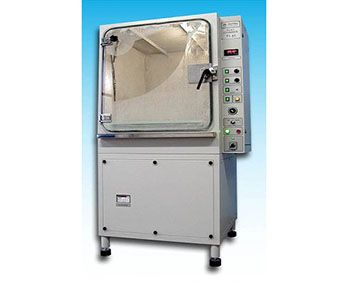
Dust chambers play an important role in validating enclosure integrity and ingress protection performance for products intended to operate in dusty environments. High-precision laboratory systems are required to evaluate how product housings and protective seals withstand particle ingress. A standardized dust test chamber allows quality teams to confirm ingress protection ratings before releasing critical consumer or industrial hardware to global markets.
Quantifying sealing thresholds requires a rigorous approach to simulating challenging particle clouds. While basic laboratory setups offer minimal environmental control, executing a standardized evaluation sequence inside specialized dust chambers answers a definitive operational question regarding long-term reliability. Such evaluations help manufacturers identify potential weaknesses in enclosure designs before products are exposed to demanding field conditions.
Laboratories require reliable environmental test equipment capable of supporting repeatable dust ingress evaluations according to recognized standards. Understanding the key operating principles of dust chambers provides valuable insight into industrial sealing validation procedures. These testing procedures are widely used across industries where equipment reliability depends on effective protection against airborne dust and particulate contamination.
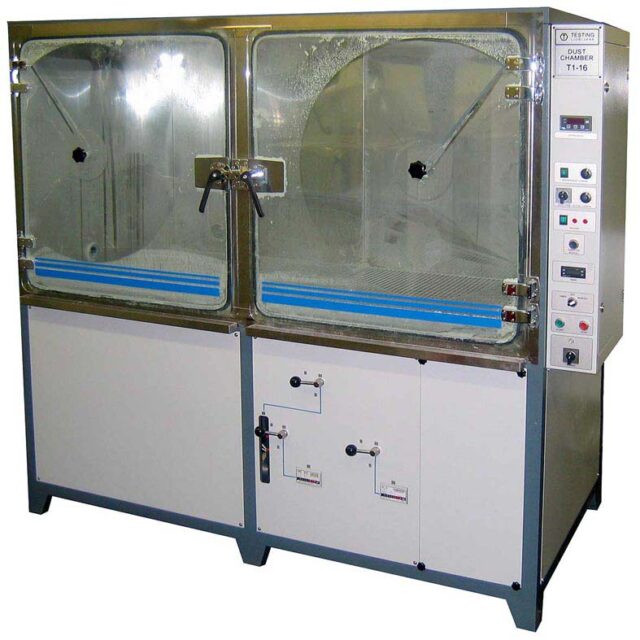
Simulating Environmental Hazards with an Automated Dust Test Chamber
Accelerated particle exposure inside industrial dust chambers helps bridge the gap between controlled laboratory conditions and real-world operating environments. Industrial equipment experiences rapid internal wear when structural joints interact with ambient micro-particles or airborne dust and particulate matter. When a sealing gasket leaks, internal electronic components collect fine particulate layers that cause localized overheating, unintended short circuits, and mechanical jamming.
It is crucial to construct each specialized dust test chamber to manage these abrasive environments. Well-designed automated systems distribute particles uniformly throughout the test compartment, maintaining constant particle movement across the specimen face. Consistent dust circulation helps ensure that all test specimens are exposed to comparable environmental conditions, improving the repeatability and reliability of test results. This controlled environment allows engineers to evaluate enclosure performance under standardized conditions and identify potential ingress vulnerabilities before products enter service.
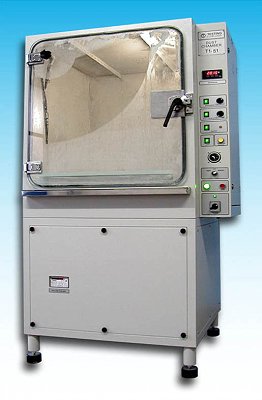
Operational Parameters for Managing Standardized Testing Dust
Achieving repeatable data points requires strict adherence to international standard guidelines to prevent fluctuating ingress protection classification results. The validation process mandates circulating a specific mass of testing dust, typically composed of dry talcum powder with a controlled particle size distribution, through the inner exposure envelope. The primary objective involves tracking whether fine particulates penetrate through rubber gaskets or structural seams during specified suction operations.
Certain dust chambers are designed to create controlled pressure differentials that encourage dust penetration into enclosure openings and seals during ingress testing. Production teams prioritize hardware calibration, helping maintain a consistent dust concentration throughout the test chamber without creating localized high-velocity air streams that distort real-world wear patterns.
Optimizing Quality Control Workflows with Advanced Particle Test Enclosures
Integrating flexible environmental enclosures into an internal validation program allows engineering firms to conduct rapid pre-compliance audits before submitting final prototypes for formal verification. A modular configuration supports multiple test procedures, providing versatile operational flexibility for research groups and high-volume quality control lines alike. This enables development teams to identify potential sealing issues earlier in the product lifecycle, reducing the likelihood of costly redesigns at later stages.
Monitoring air extraction rates helps verify that target pressure differentials remain stable throughout the evaluation cycle. Utilizing standardized testing dust helps align internal laboratory evaluations with recognized compliance procedures. Maintaining consistent test parameters throughout the process contributes to more reliable and repeatable evaluation results.
Quality equipment frames should provide effective sealing and clear observation windows, allowing your operators to visually check specimen behavior without interrupting internal airflow currents. This comprehensive hardware configuration helps support ingress protection verification activities for rugged automotive or aerospace electronics. Such capabilities are particularly valuable when assessing products intended for operation in demanding environments where dust exposure is a significant concern.

Technical Engineering Guidelines for Selecting a Dust Test Chamber
Precision mechanical layout forms the foundation of quality laboratory equipment design. Some dust test chambers incorporate airflow circulation systems designed to maintain consistent dust distribution throughout the test area. If you include corrosion-resistant stainless steel interior walls and automated extraction ports, you’ll be simplifying clean-out routines between different evaluation batches. Careful attention to these design elements can improve operational efficiency while supporting reliable testing performance over time.
Furthermore, integrating dust chambers into your research facility can accelerate product development by revealing sealing flaws early in the development process. Selecting advanced equipment helps your laboratory remain aligned with evolving international testing requirements. Early identification of enclosure weaknesses allows manufacturers to refine designs before products progress to large-scale production.
If you incorporate standardized testing dust into your routine hardware design cycle, you can help reduce the risk of field failures in industrial power systems, external lighting fixtures, and ruggedized communication modules. Consistent distribution of testing dust remains essential for maintaining repeatable testing conditions throughout extended exposure cycles. By combining appropriate test procedures with reliable dust chamber technology, manufacturers can make more informed decisions about enclosure performance and long-term product reliability.