
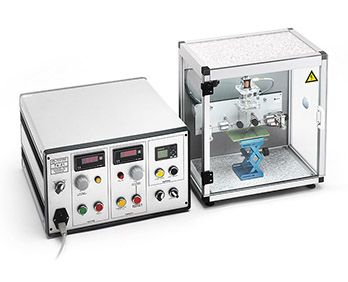
A tracking test apparatus plays an important role in evaluating solid electrical insulation materials used in electrical and industrial applications. Highly automated instruments are available to evaluate surface breakdown risks under severe environmental and chemical contamination.
Determining a standardized tracking index helps technical teams classify the resistance of insulating materials before they are used in demanding electrical applications. A comparative tracking index tester is designed to provide controlled test conditions in accordance with established international testing procedures.
Quantifying performance boundaries requires a deep understanding of standard engineering methodologies. While primary hardware infrastructure establishes an empirical baseline, conducting a proof tracking check serves as a rigorous go/no-go quality check that answers a definitive operational question: can this material survive this specific stress level or not?
Understanding the key principles of tracking resistance testing provides valuable insight into material classification and electrical safety evaluation. A tracking test apparatus plays a central role in generating the repeatable test conditions required for reliable material assessment. A quality technical study provides an authoritative overview of polymer degradation testing methods.
Evaluating Material Safety Limits with a Comparative Tracking Index Tester
Standardized stress evaluation bridges the critical gap between laboratory simulations and real-world industrial environments. Solid insulating configurations experience severe deterioration when continuous voltage changes interact with surface moisture, ionic debris, or airborne industrial dust. Over time, these environmental influences can reduce the effectiveness of insulating materials, making it important to evaluate their resistance to surface tracking under controlled laboratory conditions. The resulting tracking index provides a useful reference for comparing the performance of different materials exposed to electrical stress.
When tracking occurs, localized electrical currents quickly boil away the liquid film, creating minute, high-temperature arcs that degrade clean polymers into carbonized paths. As these conductive paths develop, the likelihood of insulation failure increases, particularly in applications where components operate under elevated voltages or challenging environmental conditions. Understanding this degradation process helps engineers interpret tracking index results and make informed decisions when selecting materials for safety-critical electrical systems.
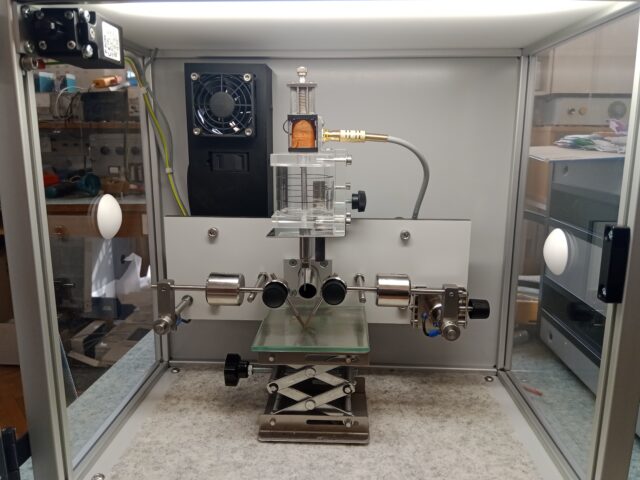
Each specialized comparative index tester should be designed to operate reliably under the demanding conditions associated with tracking resistance testing. Automated assemblies position two symmetrical platinum metal blocks at exactly thirty degrees against the sample surface, applying a contact force of approximately one Newton. If you also implement digital short-circuit current trip switches alongside automated drop-interval modules, the equipment helps identify the point at which a specimen fails.
Mechanical Execution Strategies for Defining an Accurate Tracking Index
Achieving repeatable data requires strict adherence to international guidelines to prevent fluctuating material classification results. The standard methodology places the insulation piece directly between the platinum electrode tips, applying fifty individual drops of an ammonium chloride solution at uniform thirty-second steps. The primary objective involves tracking whether the substrate sustains a continuous short-circuit state exceeding half an Ampere for two consecutive seconds before the full fluid cycle concludes.
Index evaluations require testing several progressive voltage levels to chart the true upper degradation boundaries of your chosen substrate formulation. Deploying a tracking test apparatus allows manufacturing firms to conduct internal pre-compliance testing prior to submitting new polymer compounds for final third-party safety validation.
Differentiating Proof Procedures and Comparative Tester Implementations
Understanding the distinction between progressive breakdown mapping and pass-fail validation protocols alters component deployment strategies. A comparative tracking index tester finds the maximum voltage a material can withstand before tracking occurs by scaling the energy feed upward until a short-circuit triggers. In contrast, a proof tracking test utilizes a single, pre-determined voltage setting to quickly verify basic safety compliance boundaries under known stress conditions.
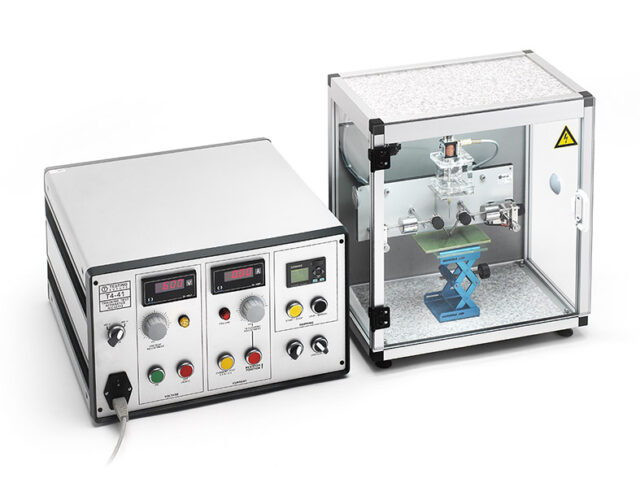
Optimized configurations support both methodologies, providing high versatility for high-volume factories and research groups alike. Integrating a comparative tracking index tester into standard laboratory workflows optimizes throughput by standardizing your environmental baseline checks.
Instead of tracking how far a compound can be pushed, proof validation focuses on high-speed quality checks, material certification steps, and mandatory product compliance reviews. Equipment capable of supporting both CTI and PTI testing provides greater flexibility for research and quality control activities.

Engineering Durable Equipment Architecture to Validate the True Result
Precision engineering forms the foundation of reliable tracking index testing. Every tracking test apparatus requires a stable power supply capable of maintaining consistent test voltages throughout the evaluation process. Furthermore, reliable electrolyte delivery systems help maintain consistent testing conditions during the assessment.
Maintaining a clear historical record of comparative tracking index tester metrics helps laboratory directors spot early measurement changes before they affect the validity of test results. Selecting an advanced tracking test apparatus can help laboratories remain aligned with current testing requirements and support consistent verification procedures.
Incorporating a stable index check directly into your routine pre-production review cycle helps reduce the risk of field failures in industrial control components, medical devices, and power distribution hardware. Accurate tracking resistance data supports informed material selection decisions and helps manufacturers evaluate the long-term suitability of insulating materials for demanding applications. By combining standardized testing procedures with a reliable tracking test apparatus, laboratories can improve the consistency of their evaluations and support effective electrical safety assessment programs.