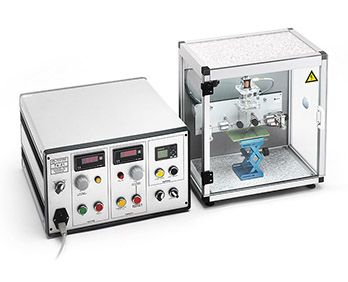
CTI tracking index values play an important role in the safety design of solid insulating materials used across modern power distribution networks and specialized industrial equipment. Engineering high-precision laboratory instruments specifically calibrated to evaluate how polymer formulations and composite components withstand surface degradation under severe electrical stress is essential for obtaining accurate results. Accurate results can be achieved by evaluating the material threshold through a standardized CTI test method, which helps assess resistance to surface tracking caused by localized contamination.
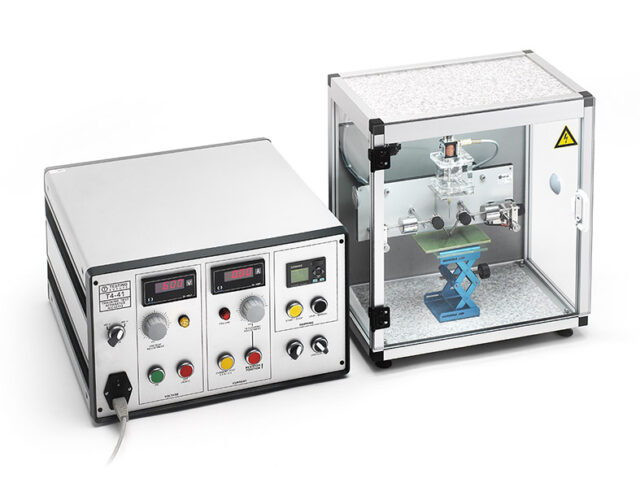
A tracking test apparatus designed according to IEC 60112 enables controlled liquid droplet delivery, accurate electrode positioning, and reliable monitoring of test conditions. While a standard sequence establishes empirical voltage thresholds up to 600 volts, a proof tracking check serves as a rigorous go/no-go quality control check confirming whether an insulation sample survives a specified electrical stress level without forming an irreversible conductive carbon path.
We supply laboratories and manufacturers with test equipment designed for electrical safety and material testing. Consolidating technical execution criteria provides an authoritative overview of structural insulation degradation procedures. Evaluating safety margins requires a clear technical understanding of comparative metrics.
Quantifying Degradation Dynamics with a Tracking Test Apparatus
Accelerated environmental stress protocols bridge the gap between laboratory data and long-term field reliability. Solid insulating materials undergo severe deterioration when exposed to ambient moisture, ionic solutions, and continuous voltage differences during standard operating life cycles. When surface tracking occurs, localized electrical leakage current vaporizes liquid film on the component face, producing high-temperature microscopic arcs that break down organic polymers into highly conductive carbonaceous channels.
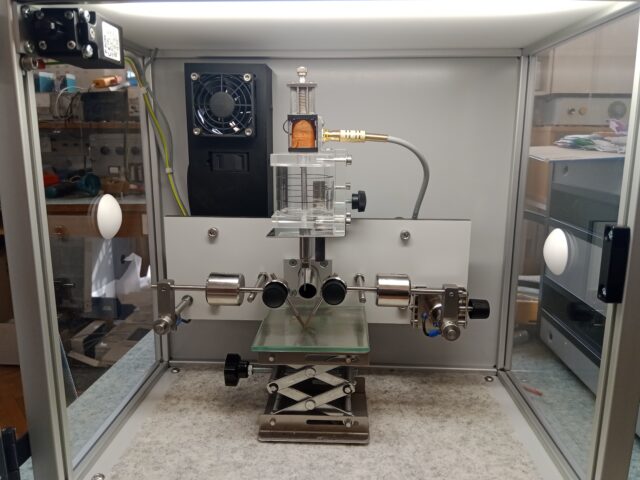
A tracking test apparatus should provide consistent droplet delivery and reliable control of test parameters to accurately simulate these operating conditions. Proper mechanical assemblies deploy standardized platinum electrodes, ensuring the mechanical contact pressure remains exactly 1.0 N against the specimen surface. In addition, automated voltage regulation alongside programmable drop-counting modules helps identify the point at which electrical breakdown occurs.
Implementing the Standardized CTI Test Method
Executing a valid assessment requires strict adherence to international procedures to guarantee reproducible material classification ratings. The standard CTI test method mandates applying exactly 50 drops of a standardized conductive electrolyte, typically a 0.1 percent ammonium chloride solution, at precise 30-second intervals between the platinum electrodes.
The primary idea behind this procedure involves finding the maximum voltage at which five separate specimen samples survive the full 50-drop sequence without experiencing a short-circuit failure exceeding 0.5 Amperes for a duration of two seconds.
CTI tracking index determination requires testing at multiple voltage levels to establish the highest voltage at which the material can withstand the prescribed test conditions. Multiple test sequences may be required to accurately determine the material’s tracking resistance classification. Proper hardware alignment ensures that liquid droplets fall centrally between the electrode tips from the specified height of 35 mm, minimizing splashing and promoting consistent wetting behavior throughout the test.
Material Certification Requirements and Tracking Test Apparatus Applications
Industrial components demand different insulation safety tiers depending on their final installation environment. The CTI tracking index classification separates materials into four distinct Material Groups, where Material Group I includes high-grade substrates withstanding 600 volts or higher, while Material Group IIIb represents materials failing at or below 175 volts. Design engineers utilize these designated classification groups to determine safe creepage and clearance distances for printed circuit boards, high-voltage vehicle connectors, and industrial motor control enclosures.
Baseline CTI tracking index data provides valuable insight into the comparative tracking resistance of insulating materials and supports informed material selection decisions. However, laboratory equipment should support both comparative tracking index (CTI) determination and proof tracking index (PTI) testing, providing versatile operational flexibility for research departments and quality control lines alike. This dual-mode capability helps manufacturers evaluate materials intended for safety-critical electrical applications.

Advanced Instrumentation Design Principles for the CTI Test Method
Precision engineering forms the foundation of quality laboratory equipment design. The CTI test method demands exceptionally stable high-voltage power supplies capable of maintaining stable test voltages throughout the evaluation process even as the electrolyte solution begins to alter surface impedance. Such instrumentation integrates controlled electrolyte delivery systems and protective enclosure designs to support reliable testing performance.
Maintaining a clear log of historical CTI tracking index deviations helps lab directors spot early calibration drift before it affects the validity of test results. Choosing an advanced tracking test apparatus ensures your laboratory remains fully aligned with evolving international safety guidelines. Consistent CTI tracking index measurements provide valuable data for material evaluation and quality assurance programs.
Regular verification and maintenance procedures help ensure continued testing accuracy. Periodic calibration checks and routine inspection of critical components help identify potential issues before they affect performance or measurement consistency. Maintaining proper service records also supports quality assurance processes and provides traceability for laboratory operations. A rigorous approach to precision instrument engineering helps support long-term reliability and consistent testing performance across a wide range of industrial applications.